Command Strip & Adhesive Hook Guide: What Actually Holds Weight in a Rental
My roommate hung a mirror on a Command strip rated for a third of its weight, and it came down at 6 a.m. while I was getting ready for an opening shift. Nobody got hurt, the mirror didn't survive, and it's the reason I actually sat down and read the weight-rating chart instead of eyeballing it like I had been. Almost every "it fell off the wall" story has the same root cause — a rating that got ignored, or a wall that wasn't prepped — and neither one is a flaw in adhesive hooks as a category. They're just less forgiving of guessing than a drilled anchor is.
Match the rating to the real load, not the resting weight
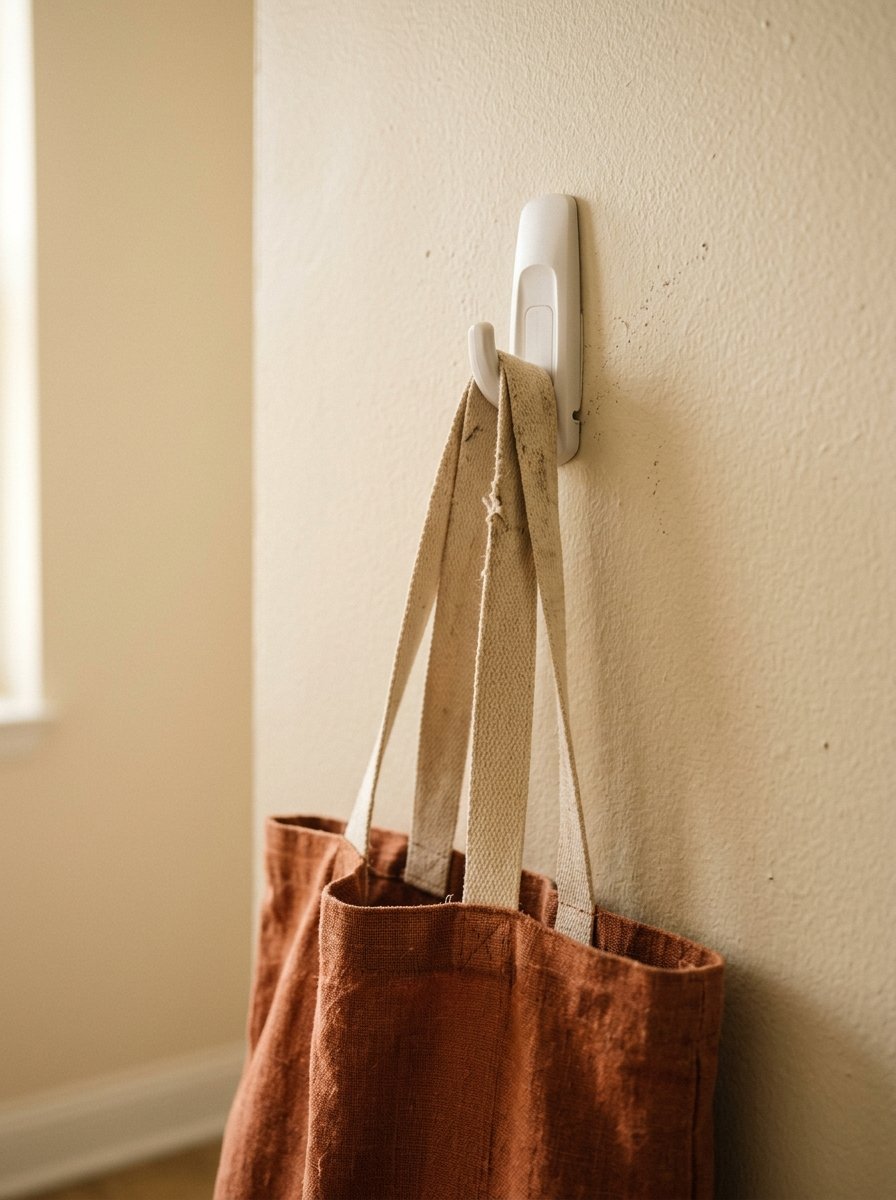
Ratings assume a static, evenly distributed load sitting still. A hook rated for 5 lbs holding a 4 lb bag that gets bumped and swung around all day is carrying more real-world stress than 4 lbs sitting motionless — size up if the item moves at all. I over-research everything I buy anyway, so now I just check the rating against the heaviest realistic use before I even open the package.
Includes multiple weight ratings in one pack (small, medium, large) so you can match the hook to the actual item instead of guessing with one size.
Check price on Amazon →Wall prep is the step everyone skips
Adhesive strips need a clean, dry, smooth surface — oils from hands, dust, or textured "orange peel" paint all cut the hold significantly. A 30-second wipe with rubbing alcohol before sticking anything on prevents most of the failures I've seen, including the mirror.
Give it time before you load it
Most strips need roughly an hour to reach full strength. Hanging something heavy right after sticking the hook up is one of the most common ways they fail early — it's not that the adhesive is bad, it just hasn't set yet.
Taking it down without losing your paint
Pull straight down and slow on the tab — that's what releases the strip cleanly. Pulling at an angle or yanking it fast is what tears paint, not the adhesive itself. This part matters more than people think when it's time to move out and you actually want that deposit back.
Lets you reuse the same hooks when you redecorate or move a hook's position, instead of buying new hooks every time.
Check price on Amazon →Past a certain weight, stop using adhesive at all
Mirrors, real shelving, anything you genuinely wouldn't want falling — that's where tension-mounted hardware takes over. It braces between floor and ceiling or between two walls instead of relying on adhesive to hold past what it's rated for, which is exactly the mistake that started this whole article.
Uses floor-to-ceiling tension instead of adhesive or screws to support heavier shelving — a better fit than a hook once you're past a few pounds.
Check price on Amazon →